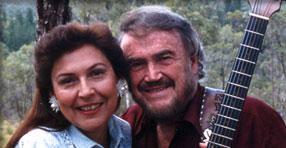




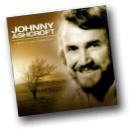
 This version of Little Boy Lost was recorded with Gay Kayler for the Little Boy Lost movie.
Little Boy Lost (Johnny and Gay)
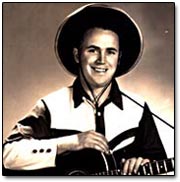 Over fifty years ago, Johnny Ashcroft transformed himself from a yodelling, guitar-strumming hillbilly recording artist, into Australia's foremost modern country music singer/songwriter/entertainer, who eventually recorded and sang songs regardless of style. That transformation commenced when Johnny Ashcroft read these few simple words on a theatrical agent's wall: 'Use the talents you possess for the bush would be strangely quiet if no birds sang–if only the best'.
There has been an unbroken line of Ashcrofts working in Australian showbusiness for nearly one hundred years. From the early 1900s to the late 1930s musos used to say, 'If you weren't dancing to Harry Ashcroft's band you just weren't dancing'. During WWII, Harry Ashcroft's out-front, jazz-singing daughter, Gloria Ashcroft, worked the top Sydney nightclubs–the same period during which Johnny Ashcroft began getting his act together. Two of Ashcroft's sons, John the elder and Mark, and Johnny's grandson, Jaiken Fitzpatrick, are now involved in this tradition.
In 1944, teenager Johnny Ashcroft sang a song he'd written at the age of fifteen on this Australia-wide radio programme. He was beaten by thirty votes for the top of the poll but topped it in a second attempt two years later. Jimmy Little, Rolf Harris, Frank Ifield, Chad Morgan and dozens of other top names, also started out this way.
In 1946, Ashcroft made his first 78rpm record, When I Waltzed My Matilda Away. It was distributed for radio airplay only.
Also in 1946, Johnny Ashcroft began touring with small vaudeville shows like Gerry Hartley and His Serenaders. In 1947, the year Normie Rowe was born, he got his first big break. He became a principal in the 2000-seat Great Levante Show, the largest travelling vaudeville theatre in Australia's history. Levante not only gifted this fledgling with the traditions of showbusiness but also the psychology and art of performing. The foundations of a long career were set.
After three months touring New Zealand with Varieties of 1948, the show turkied in Christchurch due to sleight of hand with money. Ashcroft was broke and stranded. With a showbiz associate he ad libbed his way out of trouble by writing and recording a series of radio programmes called Roundup Time. Fortuitously, the Australian High Commissioner, (Sir) Roden Cutler, arranged a meeting with Professor Shelley, the head of New Zealand Broadcasting Services. After careful consideration, the Professor arranged for eight programmes to be recorded 'live' on acetate for a fee of £8 (A$16) per programme. This was an absolute first for New Zealand's top classical music radio station, 2YA Wellington–and a first for Ashcroft. Although Johnny Ashcroft had only recorded this series accompanied by his solo guitar, Roundup Time was re-broadcast through all regional classical music stations over a 3-year period.
During Johnny Ashcroft's involvement in Australian pre-television tests in 1954, he performed to a fixed TV camera on one floor of a building while, three floors below, an audience of goggle-eyed technicians and budding producers watched his closed-circuit TV performance on a little black and white television set. It had a curved screen with rounded corners. Those early test experiments were the embryo of Australian television, which was launched in 1956. During Melbourne's 1956 Olympic Games, Johnny Ashcroft was one of the first Australians, and the first 'country and western' artist, to appear on Australian television. In a one-off ABC TV show about a Kings Cross night spot, Ashcroft wrote and sang its theme, Crazy Cross. The 'waiter', Gordon Chater, discovered Ashcroft and various singers dining in the place and prevailed upon them to sing. It was pretty corny stuff.
But from that point, Johnny Ashcroft's regular TV appearances on major TV shows enhanced his reputation.
When Johnny Ashcroft recorded six sides for Rodeo Records in 1954, C&W recordings were only available on 78rpms. Daring to be different, in 1956 he recorded the 8-track vinyl microgroove album, Songs Of The Western Trail, for Philips–another first, now part of Australia's fascinating recording history. As 'insurance', four 78rpm singles were lifted from that LP. All were as successful as the vinyl issue, which preceded the next C&W vinyl album by four years–a Slim Dusty release with EMI.
Also among the firsts on Songs Of The Western Trail was Highway 31. This song preceded the next known Australian trucking song, Lights On The Hill, by seventeen years. In January 1955, Johnny Ashcroft began writing Highway 31 on his way to join the Slim Dusty Show in Young, NSW–a show which occupied him for the whole year. But this would be the last such show with which he travelled.
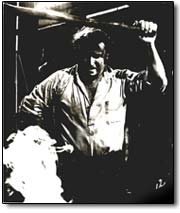
As time passed, those words began haunting Johnny Ashcroft. Ultimately, this phrase was the overpowering driving force behind Johnny Ashcroft's changed attitude to showbusiness and his recording career. His love for bush ballads was overwhelming–but he also loved other music forms. While slowly moving from the bush ballad reputation he'd built up, audiences became accustomed to his appearances dressed in a tuxedo or as the Demon King in the pantomime, Cinderella.
Finally in 1958, in a slash-and-burn approach to his image, he ditched his broad-brimmed hat and country outfits; but not before his version of Gordon Parson's A Pub With No Beer anecdotally sold 110 000 copies on novelty, plastic-coated cardboard records. Those plastic-coated 45rpm records were probably a record-needle manufacturer's best friend. Ashcroft's Bell Records version of A Pub With No Beer, did very well when it was released in the USA and on Rodeo Records in Canada during a beer strike.
In 1958, Ashcroft's dramatic sea change included Dig That Dixie, a 4-track Dixieland jazz 45rpm, recorded live with the legendary Graeme Bell Dixieland Band. It featured the who's who of jazzmen: Graeme Bell (piano), Don Burrows (clarinet), Ron Falson (trumpet), George 'Strop' Thompson (bass) and John Sangster (drums). That offering is now a collector's item.
Hot on its heels in 1958, Ashcroft's first hit, They're A Weird Mob, was recorded in the skiffle influence of the day. Bell, Burrows, Thompson and Sangster were joined by Noel Smith (flute) from the Royal Ballet Orchestra. This George Dasey song was inspired by the runaway best-selling book, They're A Weird Mob, written by John O'Grady (alias Nino Culotta). This radical change of direction shocked the country and western boots off his fans.
Aside from trad jazz and skiffle, Johnny Ashcroft subsequently recorded and performed works in many genres, including rock 'n roll, progressive or modern jazz, rhythm and blues, country-rock, pop or modern country and folk. But in the 1980s, his country music fans were shocked to their bootless toenails when he put down four disco tracks on A Time For Change–an album recorded under the name of his alter ego, the Baron. The Baron's consort, Gay Kayler (alias Lady Finflingkington), scatted on that album from which Sixteen Tons Of Hit The Road Jack was released as a twelve-inch disco single. It made the charts. 'Use the talents you possess' had kicked in big-time.
But one of Johnny Ashcroft and Gay Kayler's greatest challenges occurred when they wrote, produced and recorded a 2.3-second radio commercial for The Sydney Daily Telegraph's showbiz journalist/broadcaster, David Callan. Aired over 31 000 times during the 1980s, it was highly successful.
In that same decade, the Grace Gibson Agency requested Johnny Ashcroft to record a tongue-twisting theme for The Castlereagh Line. The 910-episode series, broadcast Australia-wide, became the longest-running radio soapie in the country's history. And it's still being re-broadcast. Johnny Ashcroft later said his multi-multi-recording of its musical theme must have mentioned nearly every town and village in Australia. It was arranged by Bob (Beetles) Young–the same man who backed him on Bandstand so many times and wrote much of the background music for the Little Boy Lost movie.
In 1947 a world-famous illusionist and expert with smoke and mirror stuff, The Great Levante, tried convincing Johnny Ashcroft to perform in a Royal Canadian Mounties' uniform, with a matching accent, instead of singing Australian songs. Ashcroft rejected this suggestion, otherwise he may never have written and recorded one of Australia's biggest selling hits of its time, Little Boy Lost, based on an idea by DJ Tony Withers. Ashcroft condensed this 3-night, 4-day saga into a dramatic 3min 40sec song about the successful search for 4-year-old Steven Walls in 1960. This unforgettable musical true story has never been challenged for its authenticity. Despite the many versions of Little Boy Lost, no guitarist has emulated the distinctive guitar sound created by George Golla on Johnny Ashcroft's original hit. They only think they have!
Little Boy Lost, Australia's first country-rock song, inspired the 1978 Little Boy Lost movie, which won the Catholic Award for Decency in Germany when it was released world-wide. A DVD of the movie was also released world-wide. The Sir Sydney Nolan painting, Little Boy Lost, hangs in the Broken Hill Art Gallery.
The anniversary of the Little Boy Lost event, in 2010, coincidently fell on the same days and nights as that historic search more than fifty years previously—Friday, 5 February to Monday, 8 February, 1960. Such is the continuing media interest in this unique Australian story, on 5 February 2010 Johnny was interviewed on sixteen radio station programmes, some through national networks, streamed world-wide.
Between 1958 and 1970, it's said that Ashcroft received more general air-play on city radio stations than all other Australian country artists combined. The EMI 34-song album, You And I Country Style, recorded with Kathleen McCormack in the late1960s, undoubtedly awakened the sleeping giant of modern country music in Australia. It catapulted modern country into mainstream city and country record markets. You And I Country Style, the biggest-selling Australian country album of its time, quickly went Gold and became the first of three Ashcroft Gold albums recorded and released over one 14-month period. This created a record for the most number of albums issued in Australia, by the same artist, within that time-frame–a record which probably still stands.
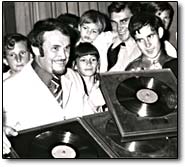 Gold Records were presented at private ceremonies in posh city venues up to 1971. That year, yet another Ashcroft first created much opposition from EMI's hierarchy. He insisted that three forthcoming Gold Records be presented, on stage, during a concert at Tamworth Town Hall–a radical change in procedure. He privately calculated this move would assist John Minson, and other Tamworth identitiies, to realise a long-held dream of making the city Australia's Country Music Capital.
The Town Hall was packed with enthusiastic fans to see this unique triple Gold Record presentation, at which Johnny Ashcroft suggested Country Music Awards be presented annually in Tamworth. This proposal was taken up and in 1973 the Australasian Country Music Awards were born. Those Golden Guitars have been all the go in Tamworth ever since. By 2002, this event had blossomed into one of the world's ten biggest festivals.
Johnny Ashcroft was one of the first inductees into the inaugural Australasian Country Music Hands of Fame in 1977. In 1980, he received the first Australian Variety Artists 'Mo' Award for Male Country Entertainer (as judged by his showbusiness peers).
And despite his many musical digressions throughout the years, Tamworth elevated him to the Australasian Country Music Roll of Renown in 1986. Ashcroft was honoured with an Order of Australia (OAM) (1990) and is also a Fellow of the Australian Institute of History and Arts (FAIHA) (1995).
Johnny Ashcroft died on 19 May, 2021. Throughout his long career Johnny and his wife, Gay Kayler, fervently believed that all performers could benefit from this well chosen advice: