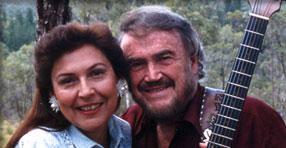




 Nevertheless, Johnny Ashcroft and Gay Kayler still retained their individuality and solo performances. But when they came together in a sensational double act to close the show, it was the stuff of standing ovations.
In January 1974, three months after the Sydney Opera House opened, these artists starred in the first all Australian country music event to be presented in its Main Concert Hall. Under the auspices of the Australian Festival of Performing Arts, the show included John Williamson, Reg Lindsay and others.
Within two months, the Main Concert Hall of the Sydney Opera House was packed when Johnny Ashcroft and Gay Kayler again starred. The Australian Variety Show was the first such show to be presented at the Sydney Opera House. It featured headliners like Slim Degrey and Custer’s Last Stand, accompanied by Peter Lane’s 18-piece Show Band.
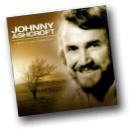 I Am Australian is featured with Gay Kayler on the Johnny Ashcroft Here's To You, Australia! CD Set.
I Am Australian (Johnny and Gay)
Having been invited to head up country music and variety shows in this world heritage listed venue, their leadership in both genres was confirmed.
From there, Johnny Ashcroft and Gay Kayler performed in major venues all over Australia. In 1975, the year of Papua New Guinea’s Independence, they toured that country for three weeks under the auspices of Air Niugini.
An extension of their talents included writing, producing and recording Australia’s shortest successful radio commercial, David Callan at Your Club (2.3 seconds). Additionally, Johnny Ashcroft recorded the many versions of the theme for the record-breaking 1980s soapie, The Castlereagh Line.
Each of these artists laid down solo and duo tracks for EMI, RCA and totally Australian companies Selection Records and Eversound (on the Jade Label). Standout recordings of the 1970s and 1980s included their Faces Of Love album and two Salvation Army Red Shield Appeal Songs–Johnny’s hit, Holy Joe The Salvo (1975) and Gay’s Captain Joe Henry (1976). Their duo recording of Imagine That, Johnny Ashcroft’s And the Band Played Waltzing Matilda and Gay Kayler’s country music hits, My Home-coming Trucker’s Coming Home and Nobody’s Child, were hugely successful.
Johnny Ashcroft, Here’s To You, Australia! was released by Rajon/Destra on 4 August, 2007. Ashcroft/Kayler fans appreciated CD copies of the back-catalogue material on this 28-song, double CD set. It incorporates the milestone albums, They All Died Game and The Cross of the Five Silver Stars, both market leaders of the 1970s and 1980s. And fans loved the four quality bonus tracks, including I Am Australian and the original hit version of Little Boy Lost. Johnny Ashcroft wrote or co-wrote twenty-six of the songs.
These performers have never believed in doing what they’ve always done. They believe that nothing stands still. Everything moves forward or goes backwards. The ever-changing world of showbusiness, particularly towards the end of the 1970s, was experiencing an undercurrent of change. This required a new approach to audiences, with new shows and new material.
Based on Gay Kayler’s suggestion, Johnny and Gay wrote and produced a series of thoroughly researched, multi-faceted historical productions, supported by sound-effects. Gay co-ordinated the concept’s innovative 8mm-slide programme by remote control, effectively showing visuals every eight seconds on a 2m square rear projection screen. From its first performance this new show was an immediate success. Johnny’s especially contrasted photographic visuals were clearly seen, up to five hundred metres away, along the riverbank at Taree’s Aquatic Festival.
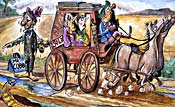 Audiences were captivated by all-Australian material, entwined in tightly scripted facts, which were presented in a light-hearted entertaining way. The Freeman Cobb story had them leaning forward in their seats. Cobb sold off his coach line prematurely. With 20,000 horses in its stables, Cobb and Co became the world’s largest single transport system in its day. In one of Steven McGrath’s cartoon visuals, this segment depicted Freeman Cobb trying to cadge a lift from one of his previously-owned coaches. After being splashed with mud, all on board, and even the horses, pass him by with utter disdain. (The spoof, What A Shame You Sold It, Mr Cobb!, is featured on Johnny Ashcroft’s Here’s To You, Australia! double CD set.)
When the Daily Telegraph’s showbiz feature writer David Callan wrote: ‘It is one of those delightful concoctions which grown-ups find as irresistible as the Christmas-present train set. There is no other show like it…’. The Imagine That! Australiana Show was in such demand it became almost un-bookable.
Performing with Musica Viva, the famous flautist Don Burrows offered advice and demonstrated his outstanding talents to school kids. Johnny Ashcroft and Gay Kayler, by using the same basic format as their adult shows, created a companion series of educational programmes called The Imagine That! Australiana Perspectives. It was an immense venture, aimed at informing children of their unique cultural heritage.
A solid year of research, unearthing historical information, was fully endorsed by the generous Australian historian, Professor Manning Clark. This series was also accredited by the NSW Education Department. Educational perspectives included Gold Discoveries Up To The Eureka Stockade, Australian Folklore, The Anzac Involvement In Gallipoli, Bushrangers, Australian Aborigines In Traditional And Today’s Society and Early Transport In Australia.
Remarkably, all The Imagine That! Australiana Shows and the Australian Studies Programmes, which enchanted more than half a million Aussie school children with true stories and pictures of their own country, ran in tandem for almost twelve years.
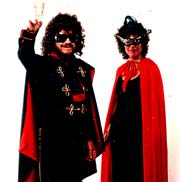 In the early 1980s, the Honourable Bill Hayden presented Johnny Ashcroft and Gay Kayler with individual National Awards for their contribution to Australian country music. But these two never entirely confined their activities to country music. A year later Johnny Ashcroft also recorded under the name of his disco-singing alter ego, The Baron. And Gay Kayler featured on that same album, A Time for Change, as her own alter ego, Lady Finflingkington–the Baron’s jazz-scatting, highly eccentric consort. The Baron’s 12-inch disco single, Sixteen Tons of Hit the Road Jack, lifted from this album, grabbed much Australia-wide air time.
In 1987, these two lateral thinkers formed a showbusiness production company, Heritage Productions Pty Ltd. Two actor/musician friends, Betty (Bettybo) and Kevin Reiman were shareholders. With the company’s musical director, Rob (Shep) Davis, Heritage Productions recorded the top selling album, The Cross Of The Five Silver Stars, in Col Joye’s private studio. It became a finalist for the Heritage Award in Tamworth’s Australasian Country Music Awards. The company disbanded when Bettybo passed away at Christmas 1990.
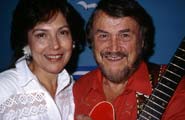 This is the time-frame Johnny Ashcroft and Gay Kayler collectively spent in their chosen profession. Few entertainers have survived such an apprenticeship. Whenever they speak of fair dinkum, totally researched, original Australian shows, Johnny Ashcroft and Gay Kayler’s single-minded approach to such productions must rank highly.
With their entertainment skills and quality productions, audiences were left feeling proud to be Australian–a legacy embedded in the hearts and minds of thousands of adults now reading these words.
Some may also recall that, as children, they were left wide-eyed in wonder by Johnny Ashcroft and Gay Kayler’s legendary stories and pictures of Australia.